
This content originally appeared on Level Up Coding - Medium and was authored by Radhakishan Surwase
PostgreSQL: The Swiss Army Knife of Databases — A Deep Dive
In a world of distributed systems, event-driven architectures, and ever-growing data, choosing the right database is no longer just a backend decision — it’s a foundational business move.
PostgreSQL isn’t just a relational database. It’s a battle-tested, future-ready data engine — capable of powering analytics dashboards, IoT ingestion layers, geolocation services, and multi-tenant SaaS platforms, all under a unified architecture. Think of it as your Swiss Army Knife for data engineering.
Let’s dive into the features that make PostgreSQL a serious contender for every modern backend, and why it’s become the backbone for startups and Fortune 500s alike.
1. A Rock-Solid Relational Core 🧠
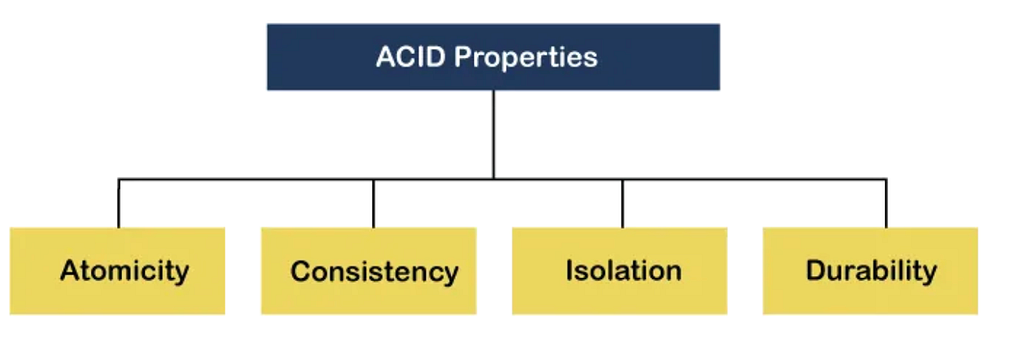
PostgreSQL’s relational engine is one of the most mature and standards-compliant in the world. It supports deep normalization, referential integrity, complex constraints, and multi-table joins — all with strict ACID guarantees. In systems where data correctness is paramount, such as billing platforms, banking systems, or workflow engines, this level of precision becomes non-negotiable. You also get support for triggers, stored procedures, and domain-specific types, making the database smart enough to enforce your business logic. And thanks to a sophisticated query planner and multi-version concurrency control (MVCC), it scales reliably even as data grows. This is the foundation — strong, predictable, and trusted for decades.
CREATE TABLE orders (
  id UUID PRIMARY KEY DEFAULT gen_random_uuid(),
  user_id UUID REFERENCES users(id),
  amount NUMERIC(10,2),
  status TEXT CHECK (status IN ('pending', 'paid', 'cancelled'))
);
2. JSONB: The Power of NoSQL Inside SQL 📦
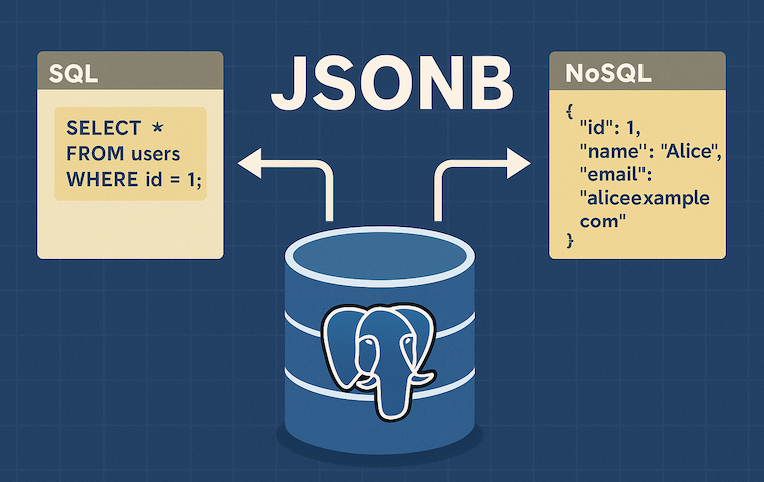
Sometimes your data isn’t rigid. Sensor payloads, 3rd-party responses, and user-submitted forms rarely follow a predictable schema. PostgreSQL’s JSONB type lets you store, index, and query semi-structured data with native performance — no need to switch to a NoSQL system. Unlike regular JSON, JSONB is stored in binary format, making it compact and searchable. You can even create GIN indexes on keys deep inside your documents, enabling blazing-fast filters and analytics. It’s perfect for hybrid models where parts of your system require flexibility without sacrificing relational structure.
CREATE INDEX idx_payload_gin ON iot_events USING GIN (payload);

SELECT * FROM iot_events
WHERE payload @> '{"status": "error"}';
3. Full-Text Search Built Right In 🔍

If you’ve ever reached for Elasticsearch, Lucene, or a separate service just for basic search, PostgreSQL has a surprise for you. Built-in full-text search lets you index, tokenize, rank, and query human-readable text — all in SQL. With support for stemming, language dictionaries, phrase matching, and ranking, it’s powerful enough for blogs, help centers, and internal knowledge bases. Best of all? It works with GIN indexes, making even large document searches lightning fast. You can add this search layer without deploying any external service — and keep all your data in one place.
CREATE INDEX idx_article_search ON articles
USING GIN (to_tsvector('english', content));

SELECT * FROM articles
WHERE to_tsvector('english', content) @@ to_tsquery('postgresql & features');
4. PostGIS: Geospatial Intelligence, Natively 🌍
Need to track vehicles, draw fences around regions, or find the nearest store? PostgreSQL becomes a full-fledged spatial database with PostGIS — an extension used by government agencies, logistics companies, and map-heavy platforms worldwide. It supports spatial types like POINT, LINESTRING, and POLYGON, and allows queries like “find all devices within 1 km” using geographic indexes. With 300+ spatial functions and support for real-world coordinate systems, it’s everything you’d expect from a GIS system — minus the need for a separate one. And yes, it’s fast, indexable, and production-proven.
SELECT * FROM assets
WHERE ST_DWithin(location, ST_MakePoint(77.1, 18.5)::geography, 1000);
5. Materialised Views: Instant Dashboards ⚡
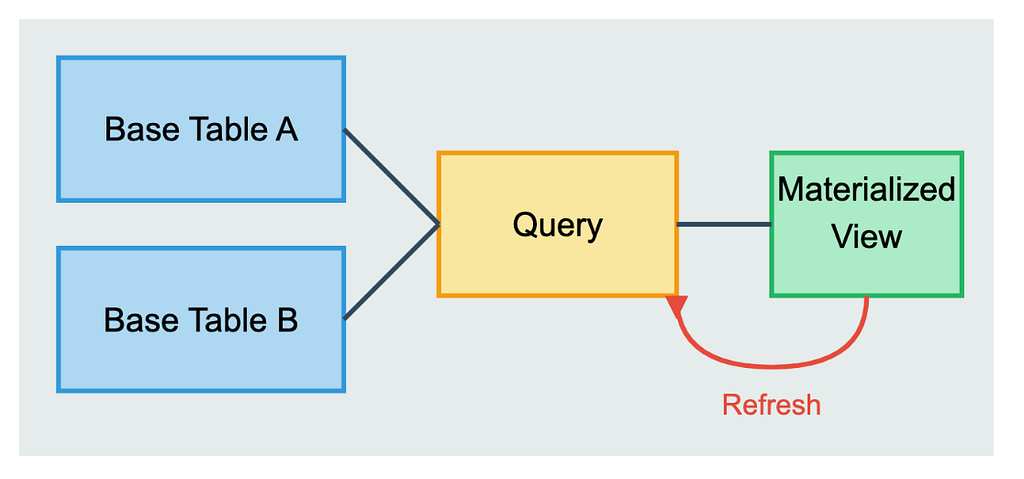
Not every aggregate query needs to be re-run in real time. Materialized views give you a way to cache the results of expensive queries — like “top devices by error count” or “revenue by region” — and store them as physical tables. You can refresh them manually or on a schedule, and even index them to power snappy frontend dashboards. This pattern is widely used in admin panels, analytics systems, and reporting engines to serve insights instantly while keeping the main database load low.
CREATE MATERIALIZED VIEW top_devices AS
SELECT device_id, COUNT(*) AS event_count
FROM device_logs
GROUP BY device_id;

REFRESH MATERIALIZED VIEW top_devices;
6. TimescaleDB: Industrial-Grade Time Series 📈
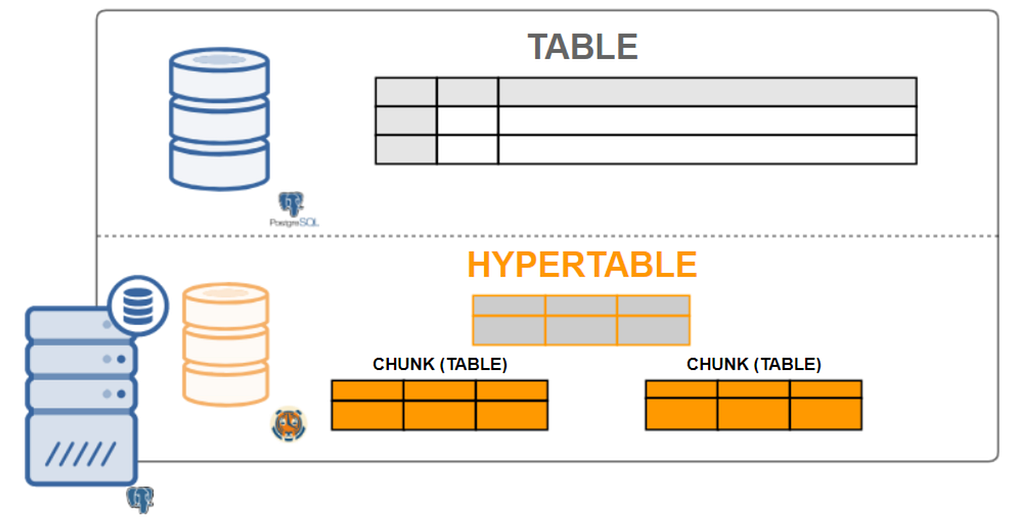
When you combine PostgreSQL with the TimescaleDB extension, it transforms into a high-performance time-series engine. You can ingest millions of rows per second, retain data for months or years, compress old records by 90%, and build real-time aggregates — all using SQL. Timescale introduces the concept of hypertables, which automatically partition your data by time and space, so your queries stay fast. Whether you’re handling IoT telemetry, server metrics, or sensor streams, it gives you speed without complexity. And the best part? You’re still writing plain PostgreSQL.
SELECT time_bucket('1 min', recorded_at), AVG(temp)
FROM telemetry
GROUP BY 1;
7. Row-Level Security: True Tenant Isolation 🛡
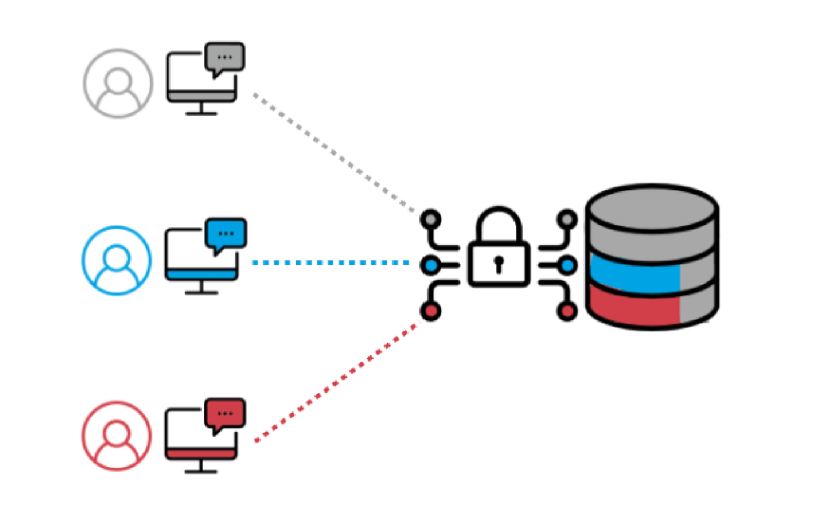
Multi-tenant SaaS apps need strict data isolation. With PostgreSQL’s Row-Level Security (RLS), you can restrict which rows are visible to each user or tenant based on a policy — enforced by the database itself. This means even if a bug leaks through in your application logic, your DB won’t let unauthorized access happen. RLS works seamlessly with user context, can be used with JWT claims, and supports full policy flexibility. It’s not just powerful — it’s a compliance win too.
ALTER TABLE device_logs ENABLE ROW LEVEL SECURITY;

CREATE POLICY tenant_filter ON device_logs
USING (tenant_id = current_setting('app.tenant_id')::uuid);
8. GIN Indexes: Built for Arrays, JSON, and Search 🧰
PostgreSQL’s Generalized Inverted Indexes (GIN) are what make its powerful features actually usable at scale. GIN indexes shine when querying inside arrays, JSONB documents, or full-text data. Instead of scanning rows, GIN lets you jump straight to matches using inverted maps of values to rows. These indexes power fast tag systems, filters, analytics dashboards, and search experiences without needing to denormalize everything. If you’re working with anything semi-structured or multi-valued — this is a must.
CREATE INDEX idx_tags ON users USING GIN (tags);

SELECT * FROM users WHERE tags @> ARRAY['admin'];
9. PostgreSQL Extensions: Plug In More Power 🔌
PostgreSQL’s power is amplified by its extension ecosystem. You can add UUID generation, encryption, metrics tracking, case-insensitive strings, and more — with a single line. Need UUIDs? Use uuid-ossp. Want row-level hashing or password checks? Use pgcrypto. Need to analyze slow queries? Enable pg_stat_statements. It’s modular, pluggable, and endlessly expandable.
CREATE EXTENSION IF NOT EXISTS "pg_stat_statements";
- uuid-ossp: UUID generation
- pgcrypto: Hashing and encryption
- postgis: Spatial/location data support
- citext: Case-insensitive string handling
- pg_stat_statements: Slow query monitoring and analysis
10. One Database. All Workloads. 🧭
PostgreSQL lets you consolidate your architecture. Instead of juggling 5 different databases for 5 different data types, you can use one — and reduce latency, cost, and operational overhead. This makes life easier for engineers, improves system integrity, and unlocks more power with fewer moving parts.
- App Data is best stored using normalized relational tables, leveraging PostgreSQL’s core relational model to ensure data integrity, reduce redundancy, and enable efficient querying through foreign key relationships and joins.
- IoT Metrics often involve high-frequency, semi-structured data. Storing this data using JSONB columns combined with hypertables (via TimescaleDB) allows for flexible schema handling and high-performance time-series data ingestion and retrieval.
- GPS Tracking data benefits from geospatial representation using PostGIS, where POINT data types and spatial indexes enable fast and accurate location-based queries, distance calculations, and geofencing capabilities.
- Dashboards typically require pre-aggregated data for performance. Using materialized views in PostgreSQL, along with proper indexing, allows for quick, snapshot-style access to complex analytics without recalculating on every request.
- Full-Text Search functionality is implemented using PostgreSQL’s native full-text search (FTS) capabilities with tsvector columns and GIN indexes, enabling fast and relevant keyword-based searches across large text datasets.
- SaaS Isolation in multi-tenant systems is securely enforced using Row-Level Security (RLS) policies, which restrict data access at the row level based on user or tenant context, ensuring each tenant sees only their own data.
✅ Final Thoughts
PostgreSQL is no longer just “the open-source relational database.” It’s the engine that powers diverse, demanding, and modern data use cases with elegance and reliability. Whether you’re building an IoT platform, a SaaS product, or a real-time analytics dashboard, PostgreSQL lets you scale and innovate — without introducing unnecessary complexity.
One tool. Every job.
That’s the PostgreSQL promise.
PostgreSQL: The Swiss Army Knife of Databases — A Deep Dive was originally published in Level Up Coding on Medium, where people are continuing the conversation by highlighting and responding to this story.
This content originally appeared on Level Up Coding - Medium and was authored by Radhakishan Surwase

Radhakishan Surwase | Sciencx (2025-10-20T03:16:24+00:00) PostgreSQL: The Swiss Army Knife of Databases — A Deep Dive. Retrieved from https://www.scien.cx/2025/10/20/postgresql-the-swiss-army-knife-of-databases-a-deep-dive/
Please log in to upload a file.
There are no updates yet.
Click the Upload button above to add an update.