
This content originally appeared on HackerNoon and was authored by Demographic
Table of Links
3 Preliminaries
3.1 Fair Supervised Learning and 3.2 Fairness Criteria
3.3 Dependence Measures for Fair Supervised Learning
4 Inductive Biases of DP-based Fair Supervised Learning
4.1 Extending the Theoretical Results to Randomized Prediction Rule
5 A Distributionally Robust Optimization Approach to DP-based Fair Learning
6 Numerical Results
6.2 Inductive Biases of Models trained in DP-based Fair Learning
6.3 DP-based Fair Classification in Heterogeneous Federated Learning
Appendix B Additional Results for Image Dataset
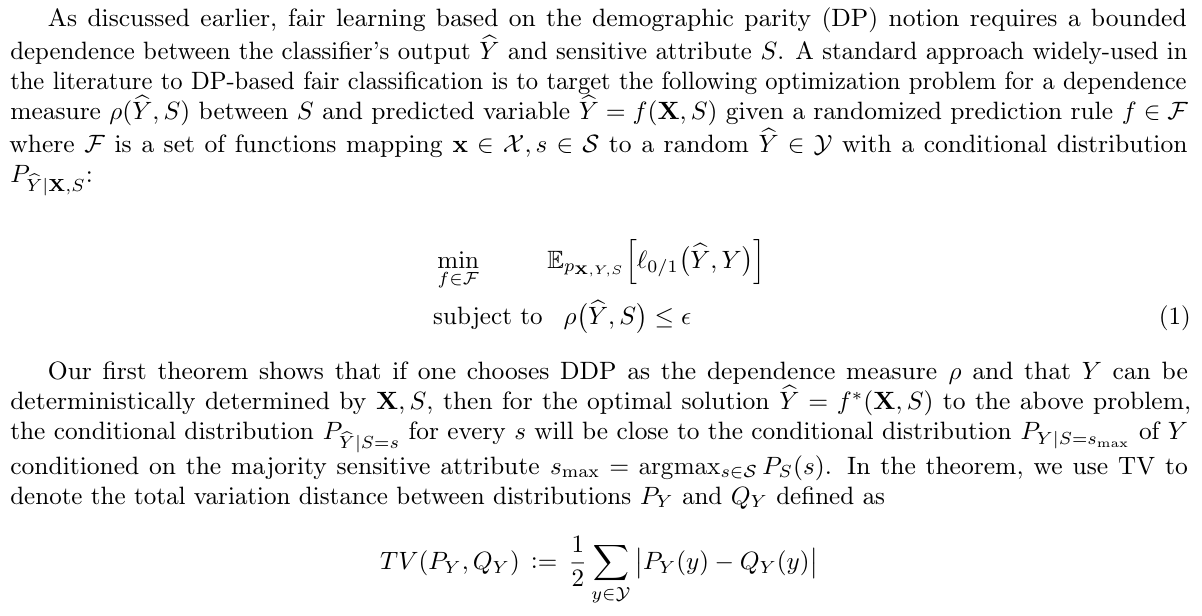
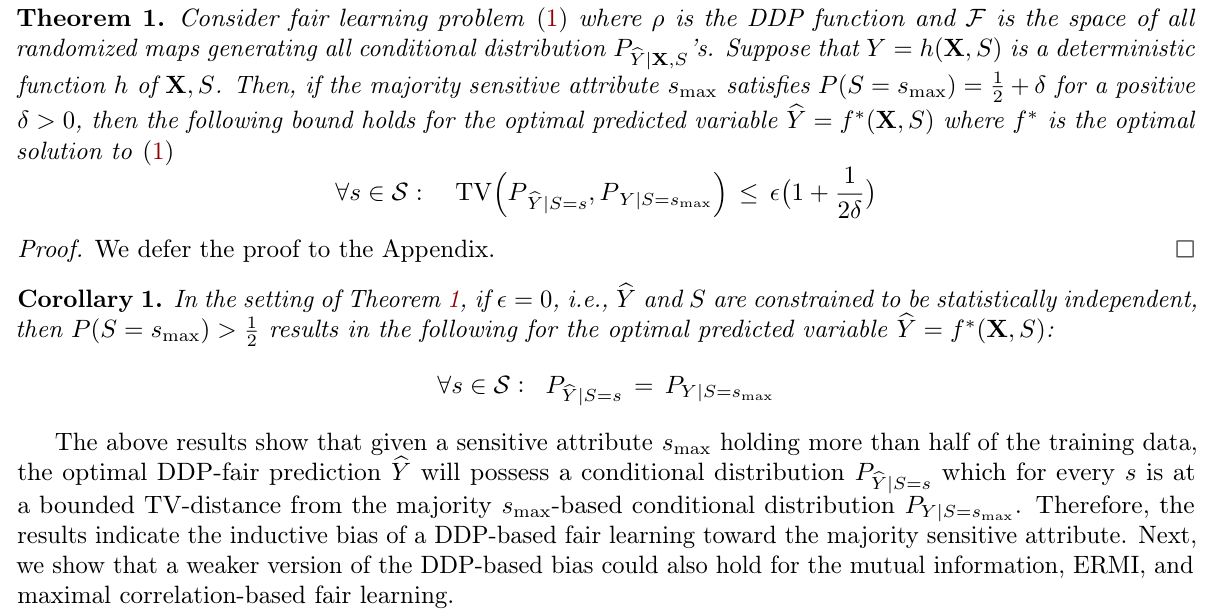
4 Inductive Biases of DP-based Fair Supervised Learning
\
\

\ Proof. We defer the proof to the Appendix
\ We remark the difference between the bias levels shown for the DDP case in Theorem 1 and the other dependence metrics in Theorem 2. The bias level for a DDP-based fair leaner could be considerably stronger than that of mutual information, ERMI, and maximal correlation-based fair learners, as the maximum the total variations in Theorem 1 is replaced by their expected value over PS in Theorem 2.
\
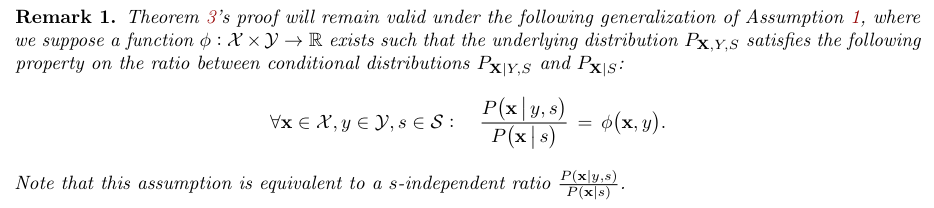
4.1 Extending the Theoretical Results to Randomized Prediction Rule
\
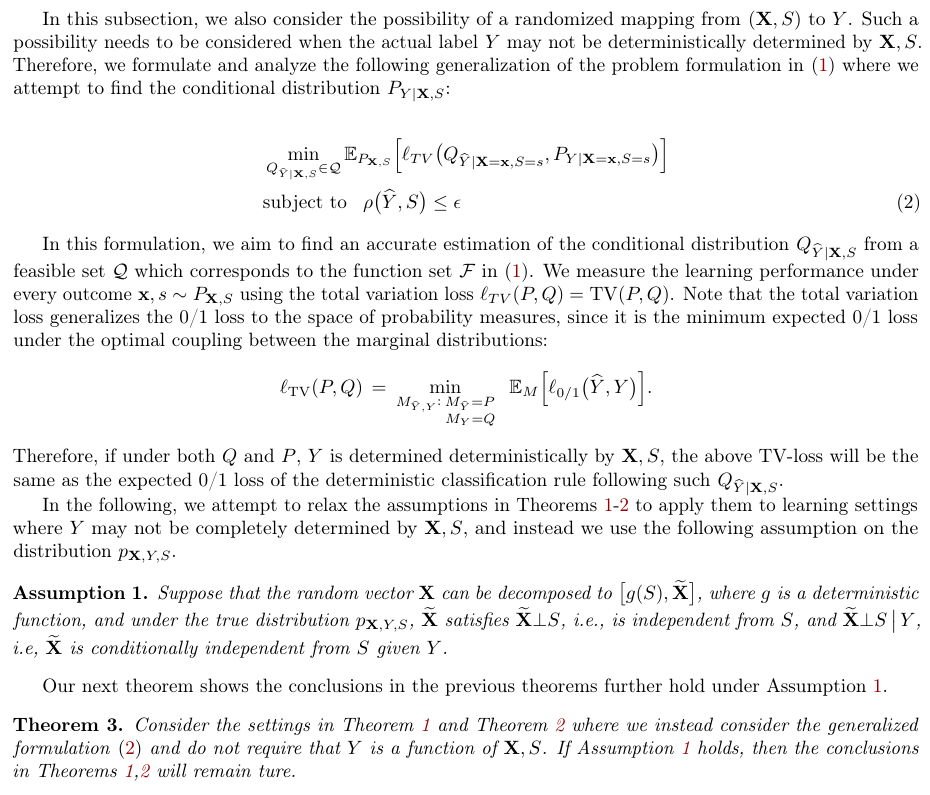
\ \ Proof. We defer the proof to the Appendix.
\
\
5 A Distributionally Robust Optimization Approach to DP-based Fair Learning
\
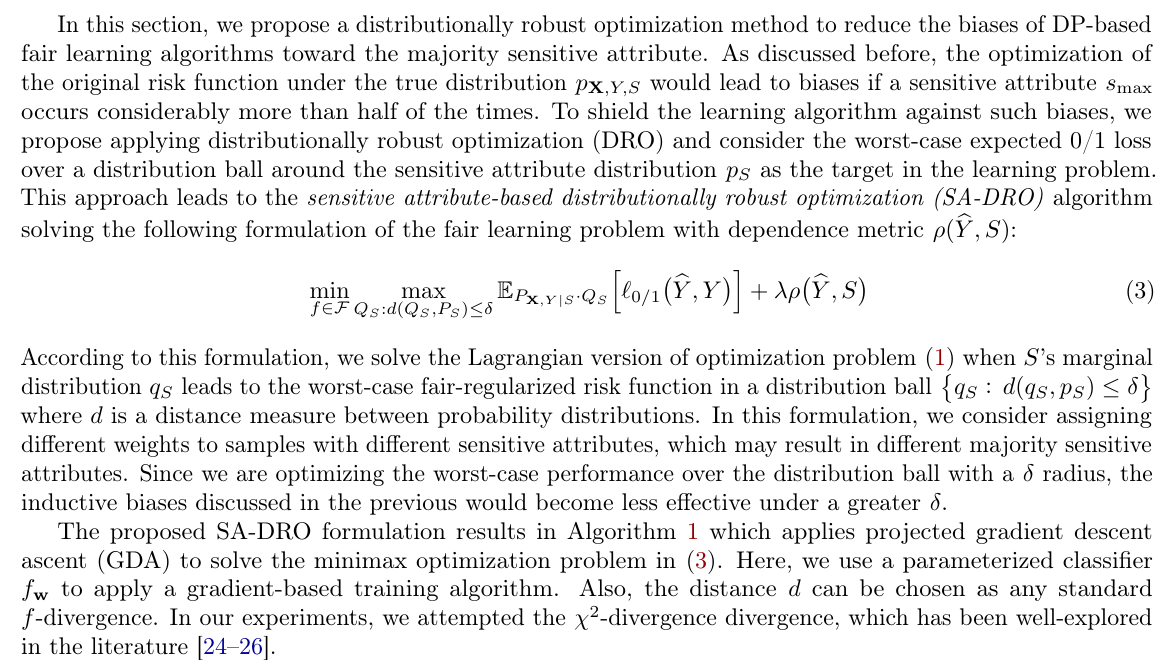
\
:::info This paper is available on arxiv under CC BY-NC-SA 4.0 DEED license.
:::
:::info Authors:
(1) Haoyu LEI, Department of Computer Science and Engineering, The Chinese University of Hong Kong (hylei22@cse.cuhk.edu.hk);
(2) Amin Gohari, Department of Information Engineering, The Chinese University of Hong Kong (agohari@ie.cuhk.edu.hk);
(3) Farzan Farnia, Department of Computer Science and Engineering, The Chinese University of Hong Kong (farnia@cse.cuhk.edu.hk).
:::
\
This content originally appeared on HackerNoon and was authored by Demographic

Demographic | Sciencx (2025-03-24T05:54:05+00:00) The Limits of Demographic Parity in AI Models. Retrieved from https://www.scien.cx/2025/03/24/the-limits-of-demographic-parity-in-ai-models/
Please log in to upload a file.
There are no updates yet.
Click the Upload button above to add an update.